

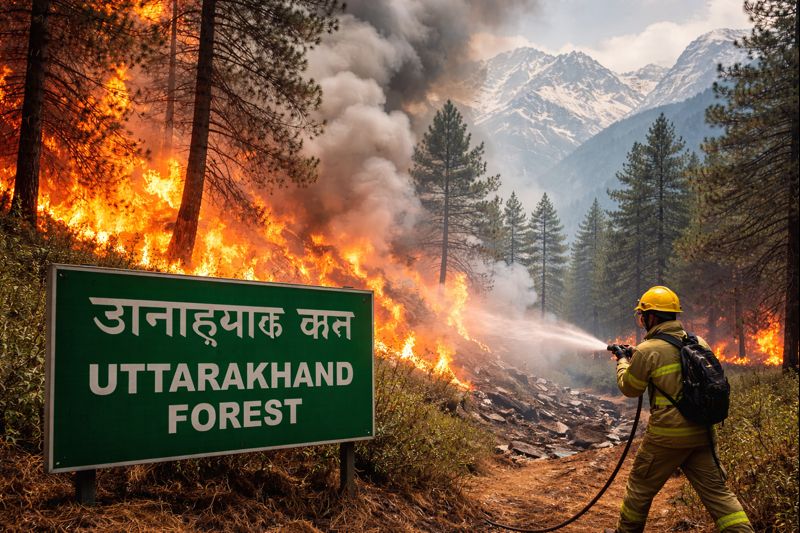
Forest fires are no longer limited to the loss of trees. Across the globe, they have emerged as a serious environmental and public health crisis, affecting air quality, climate stability, and ecosystems for years. Recent wildfires in the United States, Australia, and Canada have shown how deeply fires can damage air, water, soil, and human
Forest fires are no longer limited to the loss of trees. Across the globe, they have emerged as a serious environmental and public health crisis, affecting air quality, climate stability, and ecosystems for years. Recent wildfires in the United States, Australia, and Canada have shown how deeply fires can damage air, water, soil, and human life.
Uttarakhand is now confronting a similar threat—one that is more alarming than usual.
Forest Fires Begin in Winter, Raising Red Flags
Traditionally, Uttarakhand’s forest fire season runs from March to June, when rising temperatures dry out vegetation. However, fires breaking out in January have shocked experts and residents alike. This early onset signals a dangerous shift in climate and environmental patterns.
Why Are Forest Fires Happening in Winter?
According to Professor S. P. Sati, geologist at Veer Chandra Singh Garhwali Uttarakhand University, the primary cause is severely reduced rainfall and snowfall this year.
-
Snow-covered mountain peaks are largely bare
-
Dry leaves, grass, and shrubs have accumulated
-
Forest floors have turned into highly flammable zones
Unusually warm winter temperatures combined with prolonged dryness have created conditions normally seen only in peak summer, increasing the risk of longer and more destructive fire seasons.
Toxic Smoke Worsens Pollution and Public Health
Forest fires are significantly worsening air pollution across Uttarakhand. Smoke, ash, and fine particulate matter are spreading over both hill towns and nearby plains.
Cities Reporting Dangerous AQI Levels
Urban centres such as Dehradun, Rishikesh, and Haldwani have recorded Air Quality Index (AQI) levels above 300, which fall under the ‘very poor’ to ‘hazardous’ category.
Health experts warn that prolonged exposure to polluted air can lead to:
-
Asthma and bronchitis
-
Chronic respiratory diseases
-
Increased heart-related complications
Children, elderly people, and those with pre-existing conditions are at the highest risk.
Forest Fires Contribute Up to 20% of State Pollution
A study by the Uttarakhand Environment Protection Board (PCB) reveals that forest fires account for 15–20% of the state’s total environmental pollution—a figure that places fires alongside vehicular emissions, construction dust, and industrial pollution.
PCB Member Secretary Parag Madhukar Dhakate explained that forest fires release:
-
Carbon dioxide
-
Methane
-
Carbon monoxide
-
PM2.5 fine particles
These pollutants damage human health and also accelerate global warming.
Large Forest Areas Classified as Fire-Sensitive
As per the India State of Forest Report:
-
Over 36% of Uttarakhand’s forest cover is prone to frequent fires
-
Nearly 7.85% is classified as highly sensitive
Early winter fires increase the annual risk window, putting a large portion of the state under constant threat.
Damage to Biodiversity and Himalayan Glaciers
Forest fires cause irreversible damage to biodiversity, destroying:
-
Wildlife habitats
-
Native plant species
-
Entire forest ecosystems
Black Carbon and Glacier Melting
Professor Sati highlighted the role of black carbon particles, which:
-
Travel long distances through the atmosphere
-
Settle on Himalayan glaciers
-
Absorb sunlight and speed up glacier melting
Faster glacier melt raises the risk of water shortages, floods, and future natural disasters, threatening millions downstream.
Forest Fires Are a Direct Threat to Climate and Health
Experts agree that forest fires in Uttarakhand are no longer just a forestry issue. They represent a direct attack on air quality, water security, public health, and climate balance.
Without urgent intervention, pollution levels and ecological instability will worsen in the coming years.
Prevention Needs Community and Government Action
Preventing forest fires requires collective effort, including:
-
Early warning systems
-
Public awareness campaigns
-
Strict monitoring and patrols
-
Fire sensors and surveillance
-
Active involvement of local communities
A Clear Warning from the Himalayas
The rise of winter forest fires in Uttarakhand is a new and dangerous trend. It threatens biodiversity, human health, and climate stability across the Himalayan region.
Protecting Uttarakhand’s forests is not just about saving trees—it is about protecting lives, ecosystems, and the future of the Himalayas.

















Leave a Comment
Your email address will not be published. Required fields are marked with *